
Adres e-mail: info@shgotopharm.com

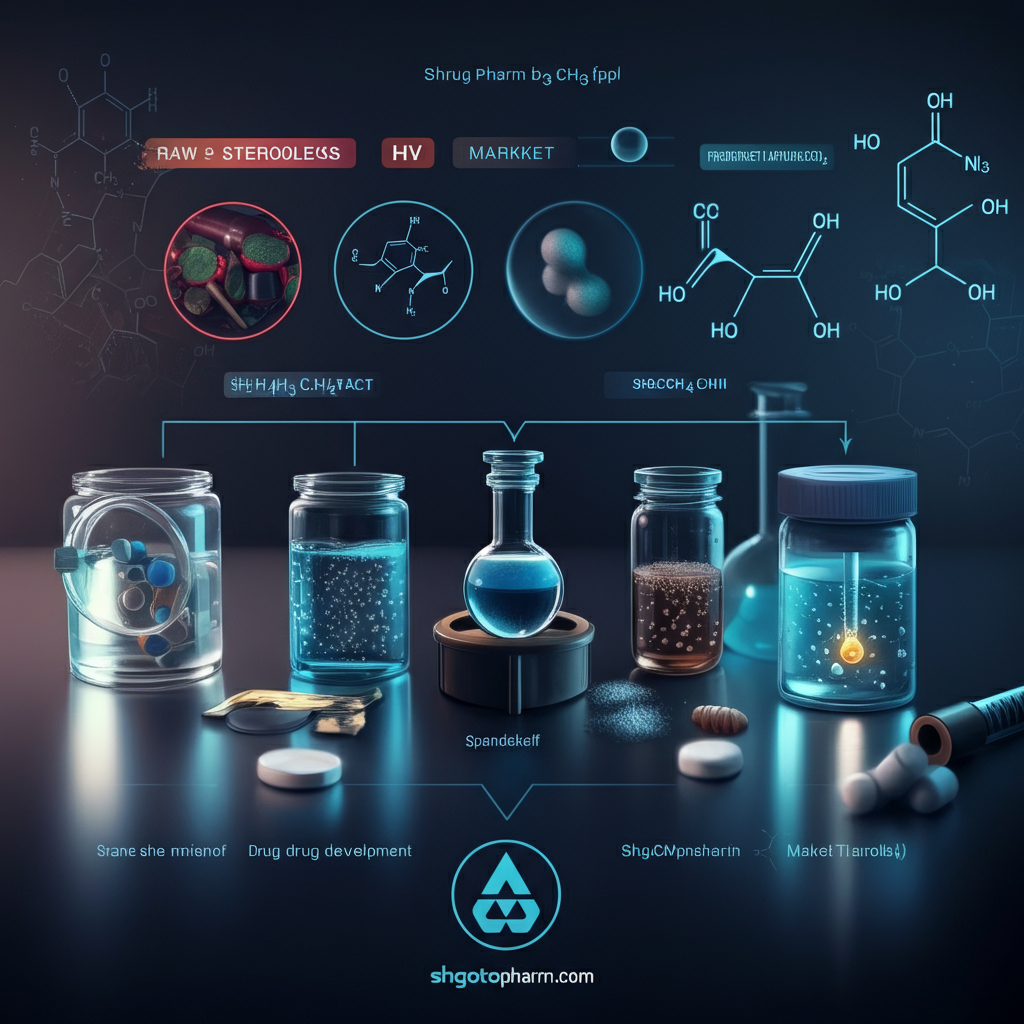
Od laboratorium do rynku: Podróż surowych sterydów w rozwoju leków

Raw Steroids in Drug Development
Raw Steroids, The term “steroids” often brings specific images to mind, but their role in modern medicine is far more nuanced and vital than popular culture suggests. For pharmaceutical companies and formulation scientists, raw steroids are foundational building blocks for a wide range of life-changing medications. These powerful compounds, known as steroid Active Pharmaceutical Ingredients (APIs), undergo a long and complex journey from a laboratory concept to a regulated, market-ready drug.
This process involves rigorous scientific discovery, precise manufacturing, and strict quality control to ensure every product is safe and effective. Understanding this path is crucial for anyone in the pharmaceutical industry, from R&D teams exploring new treatments to manufacturers sourcing high-quality materials.
Let’s explore the intricate journey of raw steroids for pharmaceutical use, from initial research to final production. Raw Steroids
The Foundation: Research and Discovery
Every drug starts with an idea. The journey of a steroid-based medication begins long before any manufacturing takes place. This initial phase is all about identifying a need and finding a compound to meet it.
Identifying Medical Needs
Scientists first identify a disease or condition that could be treated with a corticosteroid or anabolic steroid. This could range from inflammatory conditions like asthma and arthritis to hormonal deficiencies or muscle-wasting diseases. Researchers study the biological pathways of the disease to pinpoint how a steroid could intervene to regulate bodily functions, reduce inflammation, or promote tissue growth.
Compound Screening and Synthesis
Once a target is identified, the search for the right steroid API begins. This involves:
- Screening Libraries: R&D teams screen vast libraries of known steroid compounds to find candidates with the desired biological activity.
- Chemical Synthesis: Chemists may design and synthesize novel steroid molecules to improve efficacy, reduce side effects, or enhance stability. This is where innovation truly shines, as small structural changes can dramatically alter a compound’s therapeutic effects.
Promising candidates are then moved into the preclinical stage, marking the first major step in the drug development process.
Preclinical Development: From Theory to Testing of Raw Steroids
Before a potential drug can be tested in humans, it must undergo extensive preclinical evaluation to establish its safety and viability. This stage is critical for filtering out compounds that are toxic or ineffective.
In Vitro and In Vivo Studies
The chosen steroid APIs are first tested in vitro (in a lab setting using cell cultures) to assess their primary effects on a molecular level. If the results are positive, the research moves to in vivo studies (testing in animal models). These tests provide crucial data on how the compound is absorbed, distributed, metabolized, and excreted by a living organism.
These studies help determine a preliminary safety profile, identify potential side effects, and establish a starting dose for human trials. The data gathered here is compiled and submitted to regulatory bodies, like the FDA in the United States, to gain approval for clinical trials.
Clinical Trials: The Human Element
With regulatory approval, the drug development process enters the clinical trial phase, which is typically divided into three stages. This is where the steroid API is evaluated in human volunteers to confirm its safety and effectiveness.
Phase 1: Safety First
In Phase 1, a small group of healthy volunteers receives the drug. The primary goal is to assess its safety, identify side effects, and determine the appropriate dosage range.
Phase 2: Assessing Efficacy
If the drug proves safe, it moves to Phase 2. Here, it is administered to a larger group of patients who have the condition the drug is intended to treat. This phase focuses on evaluating the drug’s efficacy and further refining the safety profile.
Phase 3: Large-Scale Confirmation
Phase 3 trials involve hundreds or even thousands of patients across multiple locations. These large-scale studies are designed to provide definitive confirmation of the drug’s effectiveness, monitor side effects, and compare it to existing treatments. Successful completion of Phase 3 is a major milestone, providing the substantial evidence needed for market approval.
Manufacturing and Quality Control: Ensuring Purity and Potency of Raw Steroids
While clinical trials are ongoing, manufacturing processes are scaled up. Sourcing high-purity raw steroids for pharmaceutical use is essential. Any impurities or inconsistencies in the steroid API can compromise the final drug’s safety and efficacy.
Sourcing High-Quality raw Steroid APIs
Pharmaceutical companies partner with specialized suppliers who adhere to Good Manufacturing Practices (GMP). These suppliers must provide APIs that meet stringent specifications for purity, potency, and stability. Full traceability from the raw material source to the final API is mandatory.
Rigorous Quality Control
Every batch of raw steroid material undergoes intensive quality control testing. Techniques like High-Performance Liquid Chromatography (HPLC) and Gas Chromatography-Mass Spectrometry (GC-MS) are used to verify the identity and purity of the compound and detect any impurities. This ensures that the API is consistent and free from contaminants before it is used in drug formulation.
Formulation, Approval, and Market Launch
With a proven API and a reliable manufacturing process, the final steps of the journey come into focus.
Drug Formulation of Raw Steroids
Formulation scientists take the pure steroid API and combine it with other inactive ingredients (excipients) to create the final dosage form. This could be a tablet, cream, injection, or inhaler. The goal is to create a stable, effective product that delivers the drug to the right place in the body at the right time.
Regulatory Submission and Approval
All the data from the research, preclinical, and clinical stages are compiled into a New Drug Application (NDA) and submitted to regulatory authorities. These agencies conduct a thorough review of the evidence to ensure the drug is safe and effective for its intended use. This review process can be lengthy and demanding.
Bringing the Drug to Market
Upon approval, the medication can finally be manufactured on a commercial scale and launched to the market. This makes the drug available to patients and healthcare providers who need it. The journey doesn’t end here, as post-market surveillance (Phase 4) continues to monitor the drug’s long-term safety and effectiveness in the general population.
The Future of Raw Steroids in Drug Development
The world of pharmaceuticals is always evolving. Innovations in biotechnology and chemical synthesis are leading to the development of more targeted and selective steroid drugs with fewer side effects. As our understanding of biology deepens, new applications for both existing and novel steroid APIs will continue to emerge.
From treating rare diseases to improving the management of chronic conditions, raw steroids will remain a cornerstone of the drug development process. Their journey from a lab concept to a market-ready medication is a testament to the dedication, precision, and scientific rigor required to advance modern medicine.
Meta Information
Meta Title: Journey of Raw Steroids in Drug Development | Lab to Market
Meta Description: Explore the complex journey of raw steroids for pharmaceutical use, from R&D and clinical trials to manufacturing, quality control, and market approval.

 English
  Czech
Czech  Dutch
Dutch  French
  German
  Polish
  Portuguese
  Spanish
  Swedish